Common warning signs
- Slow or laboured cranking: the engine turns over more slowly than usual before starting, often worse after the car has sat for a day or two.
- Clicking when you turn the key or press start: the battery may not have enough charge to turn the starter motor.
- Dim or flickering lights: headlights or dashboard lights dim at idle or when you start the car.
- Electrical glitches: the infotainment system resets, the clock loses time or warning lights flash up at random.
- Start-stop stops working: many cars disable automatic start-stop when the battery is weak, often before any other symptom.
- Physical signs: a swollen or cracked case, white or blue-green corrosion on the terminals, or a rotten-egg smell near the battery.
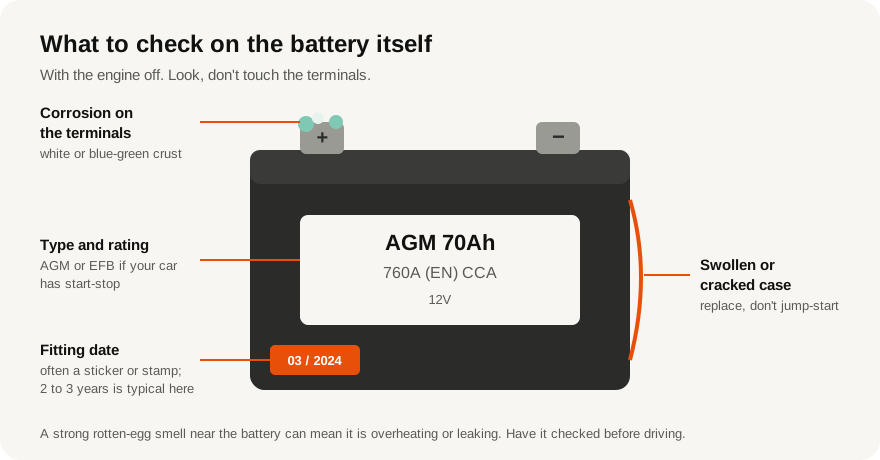
A swollen case or a strong rotten-egg smell can mean the battery is overheating or leaking. Do not try to jump-start it; have it checked.
Why batteries wear out faster in Singapore
Heat speeds up the chemical wear inside a battery, so batteries in hot climates generally have shorter lives than in cooler countries. In Singapore, many car batteries need replacing after around two to three years, though some last longer.
Driving habits matter too. Short trips, long idling with the aircon running and cars that sit unused for days do not give the alternator enough time to fully recharge the battery.
Battery or alternator?
The battery starts the car; the alternator keeps it charged while the engine runs. They cause similar symptoms, so it helps to know the difference:
- Likely the battery: the car struggles to start, but runs normally once it is going.
- Likely the charging system: the battery warning light comes on while driving, lights dim as you drive, or the car dies on the road after starting fine.
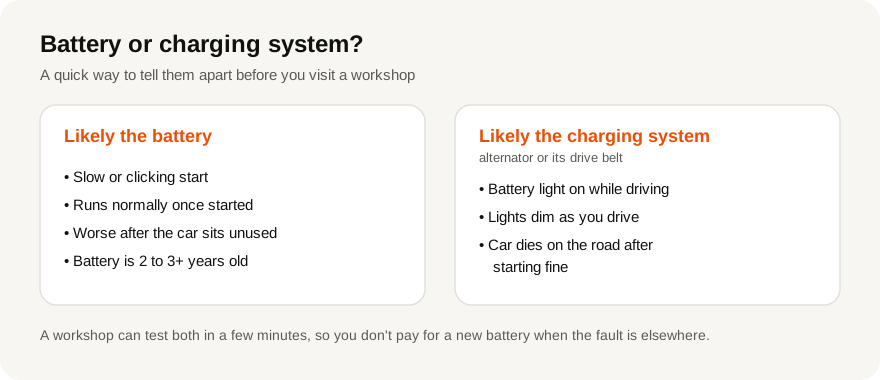
Despite its name, the battery-shaped warning light usually points to a charging problem, such as the alternator or its drive belt, not only the battery itself.
A workshop can test both in a few minutes, so a new battery is not fitted when the real fault is elsewhere.
What to know before replacing it
- Use the right type. Cars with automatic start-stop usually need an EFB or AGM battery. Fitting a standard battery in its place can shorten its life and affect the start-stop system.
- Some cars need the new battery registered. Many newer cars, especially some European brands, need the new battery coded to the car so it charges correctly.
- Check the size and rating. The battery should match the size, terminal layout and capacity your car specifies.
- Ask about warranty and disposal. Reputable workshops give a warranty on the battery and dispose of the old one properly.
On AXL you can describe the symptom once and get quotes from vetted workshops. Mention your car model, whether it has start-stop, and when the battery was last replaced.
Frequently asked questions
How long does a car battery last in Singapore?
Often around two to three years, because heat shortens battery life. Short trips, long idling and cars left unused for days can shorten it further.
Can I just jump-start the car and keep driving?
A jump-start gets you going, but if the battery is old or failing it may not hold a charge. Have the battery and charging system tested soon after.
Does the battery warning light mean I need a new battery?
Not necessarily. It usually means the battery is not being charged, which often points to the alternator or its belt. Get the charging system checked.
Describe the job once and Singapore workshops send you quotes to compare. Your details stay private until you choose.
Get free quotesRelated services
More guides
- Car aircon not cold? 8 common causes and what to do
- How to compare car workshop quotes (and what to ask before you say yes)
- Car servicing schedule in Singapore: minor vs major service
- Brake warning signs: what each symptom means
- When to replace your car tyres: tread, age and wear
- Check engine light on? What it means and what to do