Check the tread depth
Tyres have small raised tread wear indicator bars in the grooves, set at 1.6 mm. When the tread is worn down level with these bars, the tyre needs replacing.
Grip in the wet drops well before that point, because shallow grooves clear less water. Many tyre makers suggest considering replacement at around 3 mm, which is worth keeping in mind given how often Singapore roads are wet.
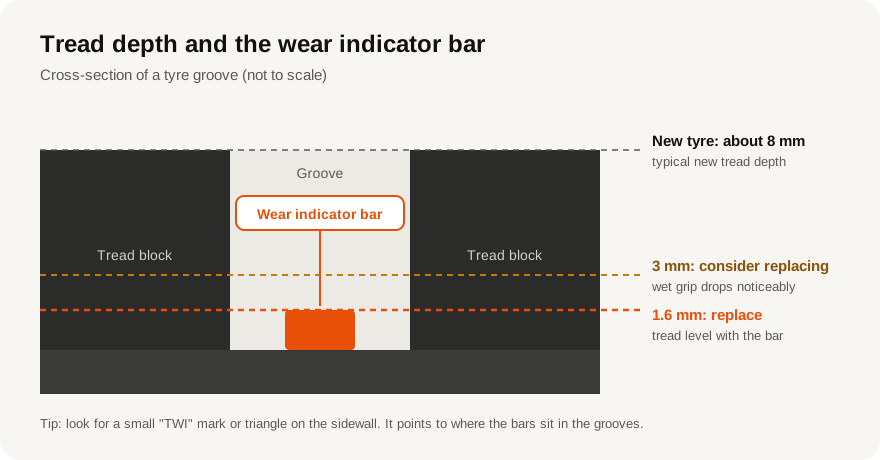
Check the tread across the whole width of each tyre, not just the middle. Wear on the inner edge is easy to miss and is often where problems start.
Check the age, not just the tread
Rubber hardens and cracks with age, even on a tyre with plenty of tread, and heat speeds this up. The manufacture date is the last four digits of the DOT code on the sidewall: 2324 means the 23rd week of 2024.
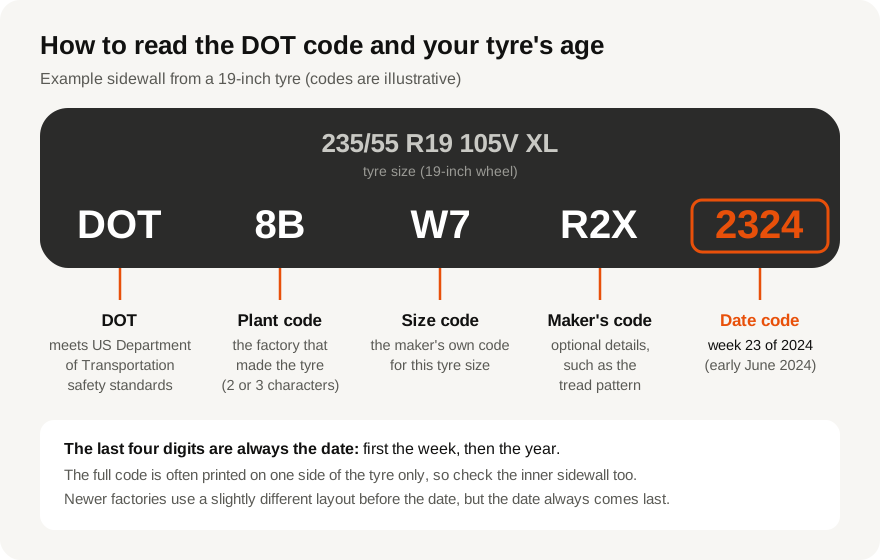
Recommendations vary by manufacturer, but many advise having tyres inspected from around five years old and replacing them by around six to ten years, whatever the tread. Look out for cracks in the sidewall or between the tread blocks.
What uneven wear tells you
- Both outer edges worn: usually under-inflation.
- Centre worn: usually over-inflation.
- One edge worn (inner or outer): often wheel alignment, such as after hitting a kerb or pothole.
- Patchy, scalloped wear (cupping): often worn suspension parts or wheels out of balance.
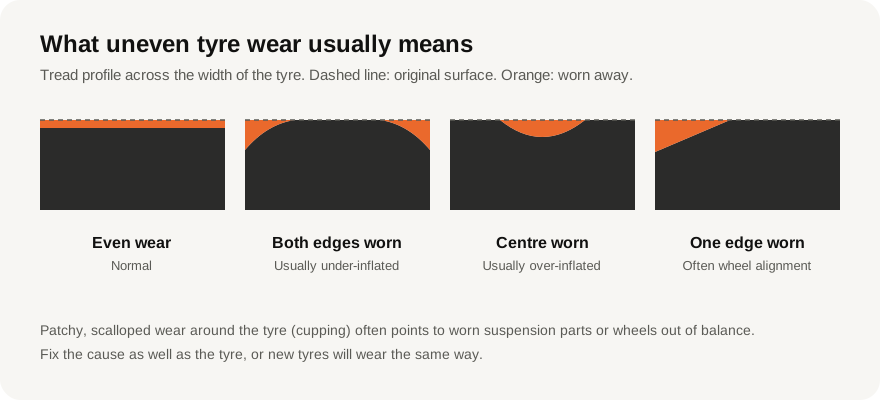
Uneven wear is worth fixing at the cause. New tyres on a car with poor alignment will wear unevenly again.
Pressure, rotation and alignment
- Pressure: check monthly with the tyres cold. The correct pressure is on a sticker in the driver's door frame or in your handbook, not the maximum printed on the tyre.
- Rotation: swapping tyres between positions, often every 10,000 km or at each service, helps them wear evenly.
- Alignment: get it checked if the car pulls to one side, the steering wheel is off-centre, or after a hard knock against a kerb.
- Balancing: vibration through the steering wheel at higher speeds often means a wheel needs rebalancing.
Punctures and damage
A small puncture in the main tread area can often be repaired properly from the inside. Punctures in the sidewall or the tyre's shoulder generally cannot be repaired safely, and neither can large holes.
A bulge or bubble on the sidewall means internal damage. Replace the tyre as soon as possible and avoid high speeds until you do.
How to read a tyre size
A size such as 235/55 R19 105V XL breaks down as:
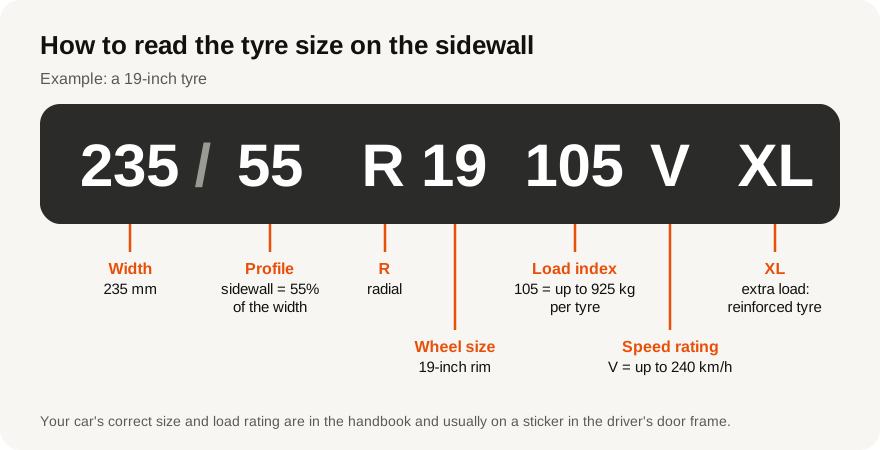
- 235: tyre width in millimetres
- 55: sidewall height as a percentage of the width
- R19: radial construction, for a 19-inch wheel
- 105: load index, the weight each tyre can carry (925 kg here)
- V: speed rating (up to 240 km/h)
- XL: extra load, a reinforced tyre rated to carry more weight
Replacement tyres should match the size, load index and speed rating your car specifies, including XL where your car calls for it. Replace tyres in pairs on the same axle so grip stays balanced. When you request tyre quotes on AXL, add your tyre size so workshops can quote the exact fitment, and say whether you prefer a premium, mid-range or budget brand.
Frequently asked questions
How often should I replace my car tyres?
It depends on mileage, driving style and conditions rather than a fixed schedule. Replace them when the tread nears the wear indicators, if they show damage, or once they reach the age limit your tyre maker recommends.
Do I need to replace all four tyres at once?
Not always. Replacing them in pairs on the same axle is common. Some all-wheel-drive cars need all four tyres closely matched, so check your handbook.
Can a tyre with a nail in it be repaired?
Often yes, if the puncture is small and in the main tread area. A workshop will inspect the inside of the tyre first. Sidewall punctures generally mean replacement.
Describe the job once and Singapore workshops send you quotes to compare. Your details stay private until you choose.
Get free quotesRelated services
More guides
- Car aircon not cold? 8 common causes and what to do
- How to compare car workshop quotes (and what to ask before you say yes)
- Car servicing schedule in Singapore: minor vs major service
- Brake warning signs: what each symptom means
- Car battery warning signs: when to replace it
- Check engine light on? What it means and what to do