How deep is the scratch?
Factory paint is built up in layers. On most cars there is a clear coat on top for gloss and protection, a base coat that gives the colour, and a primer underneath, over the metal or plastic panel. How far a scratch goes through these layers decides how it can be fixed.
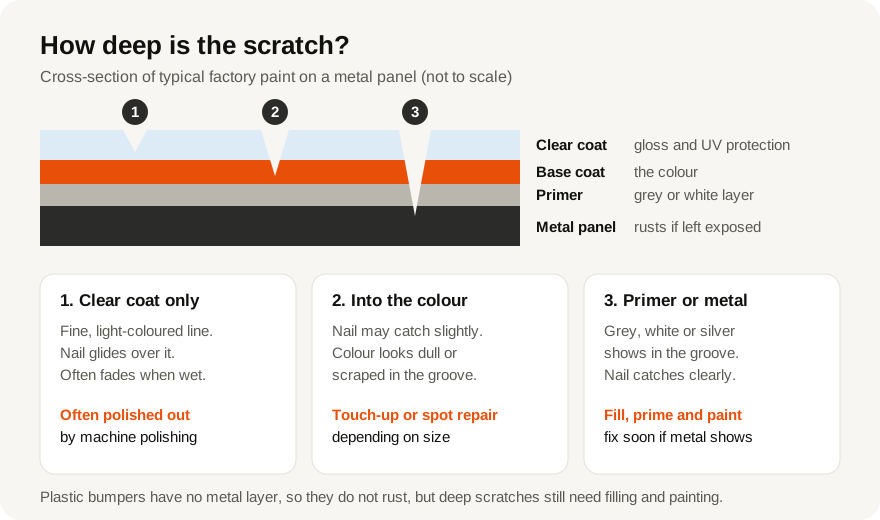
A simple check is to wash and dry the area, then run a fingernail gently across the scratch:
- Nail glides over it: the scratch is probably in the clear coat only. It often looks lighter than the paint and may almost disappear when wet.
- Nail catches slightly: it may have reached the colour layer.
- Grey, white or bare metal in the groove: it has gone through to primer or metal.
This is only a rough guide. Paint thickness varies between cars and panels, and a workshop can judge depth much better in person or from clear photos.
What each kind of scratch usually needs
- Clear coat scratches and swirl marks: often removed by machine polishing, which takes a very thin layer off the clear coat to level it. It cannot be repeated endlessly, because the clear coat is thin.
- Scratches into the colour: a small one may be improved with touch-up paint. A longer or more visible one usually needs a spot repair, where the area is prepared, painted and blended into the surrounding paint.
- Through to primer or metal: the scratch is filled where needed, primed and painted. On larger areas this becomes a panel respray.
- Stone chips: small chips on the bonnet and front bumper are common. They can be touched up, but many chips together are sometimes better dealt with by repainting that panel.
For any paint repair, ask whether the workshop will blend the new paint into the neighbouring panels. Even when the paint is mixed to your car's paint code, colours can look slightly different after years of sun, and blending helps hide the join.
Do not leave bare metal exposed. In Singapore's heat, humidity and frequent rain, rust can start on exposed steel, and once it spreads under the paint the repair gets bigger. If metal is showing, get it sealed or repaired soon. Plastic bumpers do not rust, but deep scratches in them still need proper repair.
Dents: with or without paint damage
With dents, the key question is whether the paint is still intact.
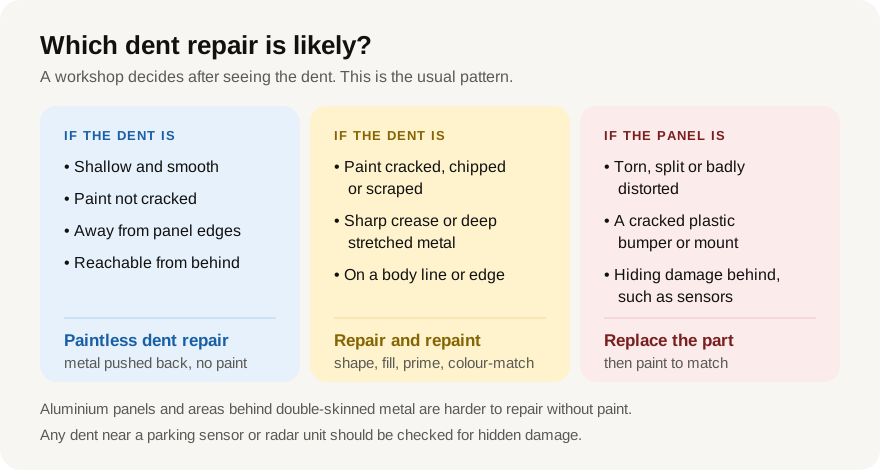
- Paintless dent repair (PDR): a technician works from behind the panel, or pulls from the front, to ease the metal back into shape without repainting. It suits shallow, smooth dents where the paint has not cracked, such as many door dings. It keeps the original paint.
- Repair and repaint: when the paint is cracked or the metal is creased or stretched, the panel is reshaped, filled where needed, primed and painted. This is the traditional panel beating and respray route.
- Replacement: a badly torn or distorted panel, or a cracked plastic bumper, may be cheaper or better to replace than repair. The new part is then painted to match.
Dents on sharp body lines, near panel edges or on aluminium panels are harder to fix without paint, so the right method depends on the car and the damage. A dent on a bumper can also hide damage to parking sensors, brackets or radar units behind it, so mention any warning messages when you ask for quotes.
When it is more than cosmetic
Most scratches and small dents are cosmetic. Some damage is not, and should be checked before you keep driving normally:
- A light, mirror or bumper that is loose, hanging or could fall off
- Damage near a wheel, especially if the tyre rubs, the steering pulls or the wheel looks out of line
- Warning lights or messages about parking sensors, cameras, radar or driver assistance after the knock
- Fluid leaking from under the car, or sharp torn metal that could cut someone
If a wheel looks pushed in or the steering feels wrong after a knock, do not drive the car. Have it inspected or towed. If the damage came from an accident involving another vehicle, follow your insurer's process before arranging repairs.
Getting comparable quotes
Body and paint quotes vary with the method each workshop chooses, so good photos make a real difference.
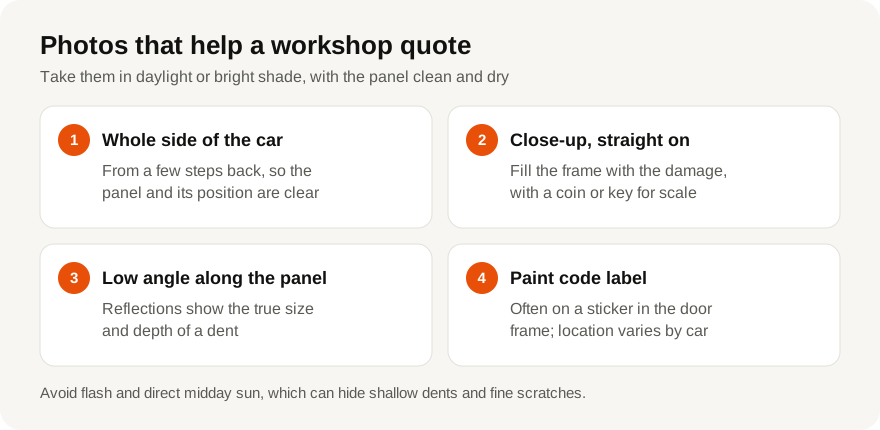
When you compare quotes, check whether each one is a spot repair, a full panel respray or a replacement, and whether blending into the next panel is included. On AXL you can describe the damage once and add photos, and vetted workshops quote, so you can compare the options side by side before you book.
Frequently asked questions
Can a scratch be polished out?
If it is only in the clear coat, often yes. A scratch that catches your fingernail, or shows grey, white or bare metal, has usually gone too deep for polishing alone and needs touch-up or repainting.
What is paintless dent repair?
A method of easing a dent back into shape without repainting, usually by working from behind the panel. It suits shallow, smooth dents where the paint is not cracked. Creased, sharp or paint-damaged dents usually need repair and repainting instead.
Is touch-up paint enough for a deep scratch?
It can seal small chips and fine scratches and help stop rust, but it rarely looks invisible on a longer scratch. For a neat finish, a spot repair or panel respray with blending is usually needed. A workshop can advise from photos.
Describe the job once and Singapore workshops send you quotes to compare. Your details stay private until you choose.
Get free quotesRelated services
More guides
- Car aircon not cold? 8 common causes and what to do
- How to compare car workshop quotes (and what to ask before you say yes)
- Car servicing schedule in Singapore: minor vs major service
- Brake warning signs: what each symptom means
- Car battery warning signs: when to replace it
- When to replace your car tyres: tread, age and wear
- Check engine light on? What it means and what to do