First, know which gearbox you have
Most automatic cars in Singapore use one of three designs. They work differently, so something that is normal on one can be a warning sign on another.
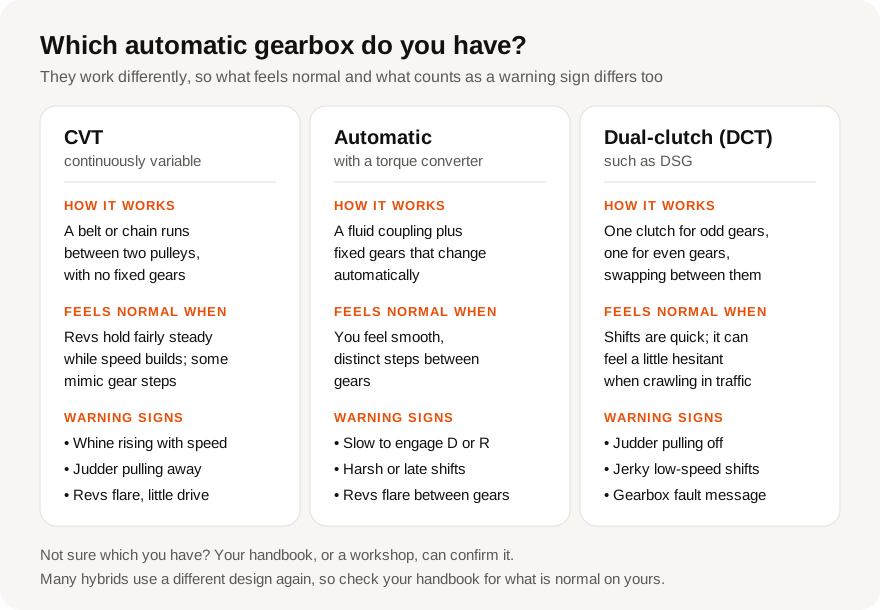
- CVT (continuously variable transmission): common on many Japanese cars. There are no fixed gears, so the revs can rise and then hold fairly steady while the car speeds up. That can feel odd if you are used to gear changes, but it is normal.
- Conventional automatic: uses a torque converter and a set of fixed gears. You feel smooth, distinct gear changes.
- Dual-clutch (DCT or DSG): works like two manual gearboxes with automated clutches. Shifts are very quick, and a little hesitation or slight jerkiness at walking pace can be normal on some cars.
Your handbook, or a workshop, can confirm which type you have. Many hybrids use a different design again, so check the handbook for what is normal on your car.
Warning signs and what they can point to
The signs to watch for are a change from how the car normally feels: a new noise, a new vibration, or gear changes that are slower, harsher or less predictable than before.
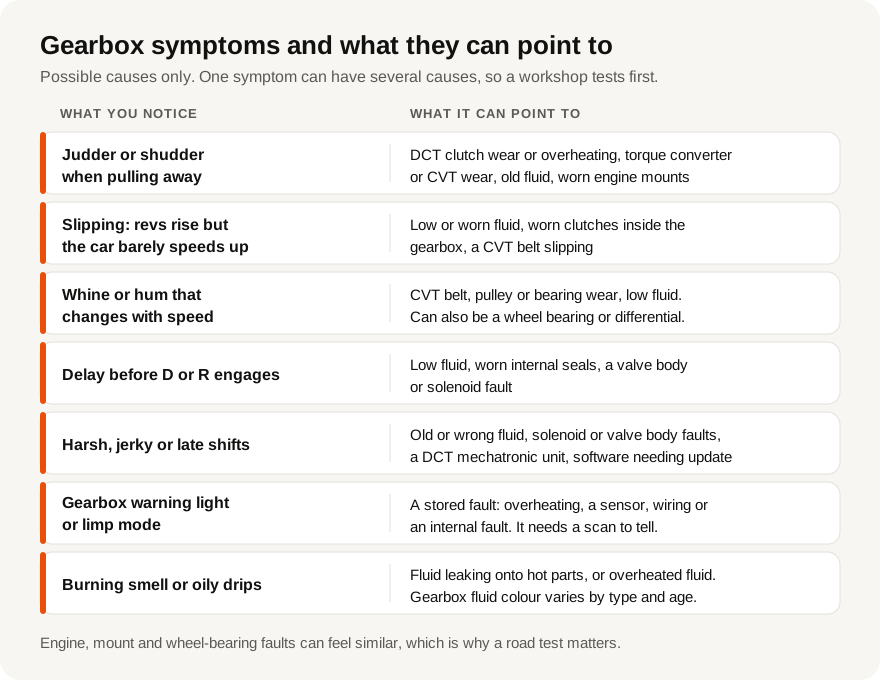
- Judder or shudder: a vibration when pulling away or at low speed. On a dual-clutch car it often points to the clutches, especially with lots of crawling in traffic. On a CVT or conventional automatic it can point to internal wear or worn fluid.
- Slipping: the revs rise but the car does not speed up to match, or the revs flare between gears. This is a sign the gearbox is not transmitting power properly.
- Whine or hum: a noise that rises and falls with road speed. On a CVT it can point to belt, pulley or bearing wear. A wheel bearing or differential can make a similar sound, so it needs checking on a road test.
- Delayed engagement: a pause or a thump before the car moves after you select D or R.
- Harsh, jerky or late shifts: gear changes that bang, flare or happen at odd times.
- Warning light or limp mode: many cars show a gearbox warning or message and limit gears or power to protect the gearbox. The car stores a fault code that a workshop can read.
A symptom is a starting point, not a diagnosis. Engine misfires and worn engine mounts can also feel like a gearbox judder, which is why a workshop should scan for fault codes, check the fluid and road test the car before recommending repairs.
How urgent is it?
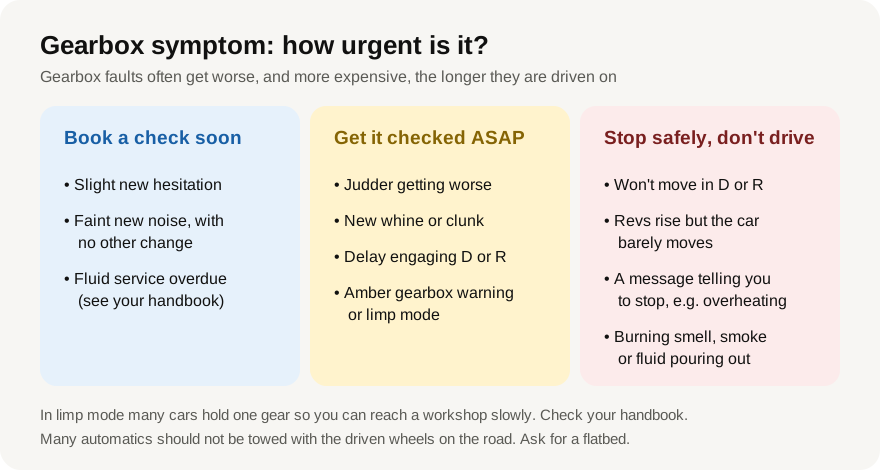
Do not keep driving if the car will not move properly in Drive or Reverse, the revs rise but the car barely moves, a message tells you to stop the car, or you smell burning or see smoke or fluid pouring out. Slipping can leave you without drive in the middle of traffic. Stop somewhere safe, switch off and arrange for a workshop or tow. Many automatics should not be towed with the driven wheels on the road, so check your handbook and ask for a flatbed.
If the car is in limp mode but otherwise drives, many cars are designed to let you reach a workshop slowly. Check your handbook, drive gently and avoid expressways if the car cannot keep up with traffic. Gearbox problems rarely fix themselves, and driving on a slipping or juddering gearbox can turn a fluid or software fix into a much bigger repair.
Fluid, heat and stop-start traffic
Gearbox fluid lubricates, cools and, in most automatics, also operates the gear changes. Old, low or incorrect fluid is behind a share of gearbox complaints, and it is one of the first things a workshop checks.
- Many modern automatics have no dipstick. The level is checked by a workshop, often at a set fluid temperature. If your car does have one, follow the handbook procedure exactly.
- Use the fluid your car's maker specifies. CVTs, dual-clutch and conventional automatics use different fluids, and the wrong one can cause judder or damage.
- Check your handbook's schedule. Some makers list a fluid change interval, and some describe the fluid as long-life. Heavy stop-start traffic and high temperatures are often treated as severe conditions, which can shorten the interval. Our servicing schedule guide explains how severe conditions work.
- Ask about adaptation. After a fluid service or repair, some gearboxes need a software reset or relearn so they shift smoothly. Ask whether it is included.
In crawling traffic, especially in a dual-clutch car, avoid creeping forward a few centimetres at a time or holding the car on a slope with the accelerator. Use the brake to hold the car, leave a small gap, then move off cleanly. This reduces clutch and fluid heat on many gearboxes. Your handbook may have specific advice for your car.
Before you book
Gearbox quotes range from a fluid service or software update to clutch, mechatronic or valve body work, or a rebuilt or replacement unit. Clear details help workshops quote the diagnosis and the likely work. Tell them:
- The make, model, year and mileage, and the gearbox type if you know it
- Exactly when the symptom happens: pulling away, at a certain speed, uphill, when cold or after a long drive in traffic
- Any warning lights or messages, and any fault codes you have already read
- When the gearbox fluid was last changed, if ever
- A short video with sound if the symptom is a noise or judder, recorded safely by a passenger
When comparing quotes, check whether each one includes diagnosis, the fluid type and amount, any software adaptation, and whether replacement parts are new, rebuilt or used. On AXL you can describe the gearbox problem once and vetted workshops quote, so you can compare before committing to major work.
Frequently asked questions
Is it normal for a CVT to whine?
A faint, steady hum can be normal on some CVTs. A whine that is new, getting louder or rising with speed should be checked, especially if it comes with judder or slipping. Low fluid and wear inside the gearbox are common causes.
Can I drive in limp mode?
Limp mode protects the gearbox by limiting gears or power. Many cars let you drive slowly to a workshop, but check your handbook. If the car will not move properly, smells of burning or shows a message telling you to stop, do not drive it. Arrange a tow instead.
Will a fluid change fix my gearbox problem?
Sometimes, if the cause is old, low or incorrect fluid. It will not fix worn mechanical parts or failing electronics. A workshop should read the fault codes, check the fluid and road test the car before recommending a fluid change or any repair.
Describe the job once and Singapore workshops send you quotes to compare. Your details stay private until you choose.
Get free quotesRelated services
More guides
- Car aircon not cold? 8 common causes and what to do
- How to compare car workshop quotes (and what to ask before you say yes)
- Car servicing schedule in Singapore: minor vs major service
- Brake warning signs: what each symptom means
- Car battery warning signs: when to replace it
- When to replace your car tyres: tread, age and wear
- Check engine light on? What it means and what to do
- Car scratch or dent: what can be fixed, and how?