The legal limits in Singapore
LTA's rules for tinted film and tinted glass, set out on its OneMotoring website, are about visible light transmission (VLT): the share of visible light that passes through the window. The higher the percentage, the lighter the tint.
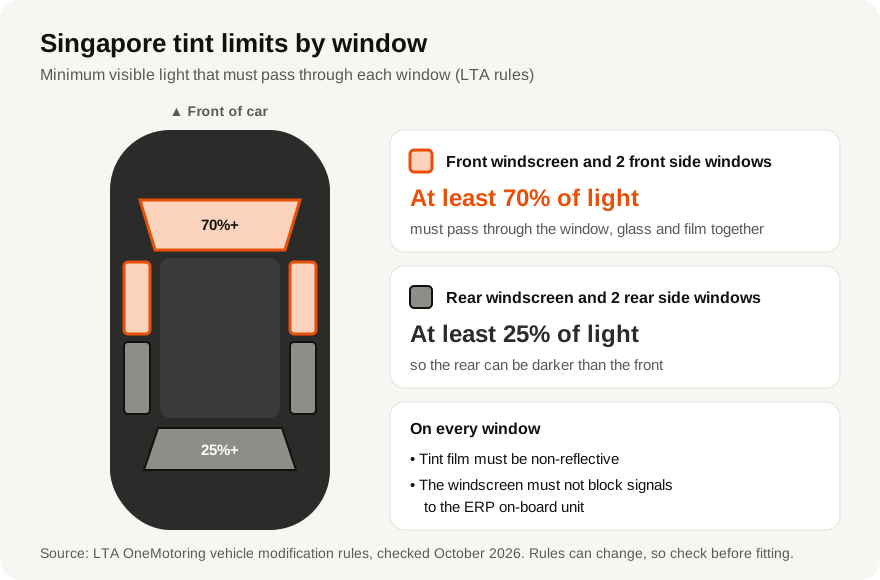
- Front windscreen and the two front side windows: at least 70% of light must be able to pass through.
- Rear windscreen and the two rear side windows: at least 25% of light must be able to pass through.
- All tint film must be non-reflective. Mirror-like films are not allowed.
- The front windscreen must not interfere with ERP signals between the vehicle's on-board unit and the gantries.
- Tinted glass (as opposed to film) must also meet international safety glass standards.
If you want to be sure your tint complies, LTA says you can send the car for testing at any LTA-Authorised Inspection Centre. LTA's modification page also sets out penalties for illegal modifications, for owners as well as workshops, so it is worth getting right. Rules can change, so check OneMotoring or ask LTA if you are unsure.
Why the glass counts too
Most factory glass is not perfectly clear. Windscreens and side windows often have a slight tint of their own, and light has to pass through both the glass and the film. The two figures roughly multiply, so the finished window is always darker than the film on its own.
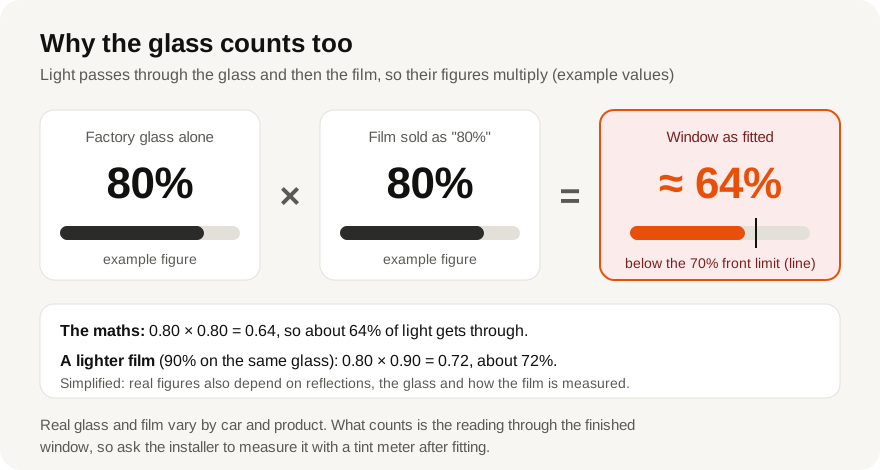
That is why a film described as "70%" can leave the front windows below the legal limit once it is on the glass. The figure that matters is the reading through the finished window. How much your own glass already blocks depends on the car, so there is no single film that is safe for every model.
Ask the installer to measure the front windscreen and front side windows with a tint meter after fitting, and to show you the reading. A careful installer will often measure the bare glass first and choose the film to suit.
Choosing a film: heat, glare and signals
Darkness and heat rejection are different things. A lot of the sun's heat comes from infrared light you cannot see, and some films block much of it while staying fairly light. That matters for the front windows, where you cannot go dark anyway.
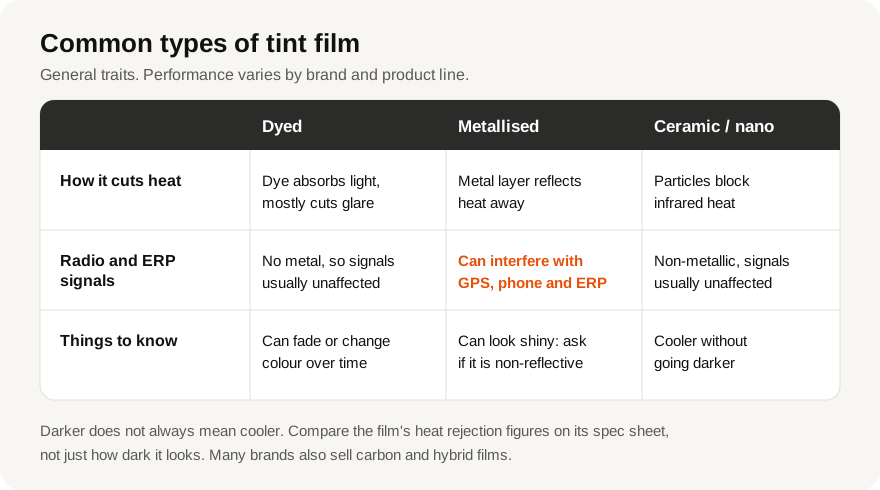
- Compare heat rejection, not just darkness. Ask for the film's spec sheet, and compare like with like, as brands measure and describe heat rejection in different ways.
- Mind the ERP on-board unit. LTA's guidelines list solar film that interferes with radio frequencies, and windscreens with a metallic oxide coating or built-in defroster, as known causes of interference with the OBU antenna. If your windscreen or film is the problem, the antenna area may need a cut-out. Leave any moving or refitting of the OBU to an LTA-authorised installer.
- Think about night driving. Singapore roads are well lit, but dark rear glass still makes reversing and changing lanes at night harder. The legal minimum is not always the comfortable choice.
Sunshade strips, curtains and old film
LTA's rules also cover sunshades fixed to the glass. No part of a fixed sunshade should be more than 150mm from the top edge of the front windscreen, or more than 100mm from the top edge of the rear windscreen and side windows. Curtains and removable sunshades can reduce what the driver sees, so LTA says they can only be used when the car is stationary or parked.
Old film that is bubbling, peeling or has turned hazy is more than a cosmetic issue on the windscreen and front windows. If it is in the driver's line of sight and you cannot see clearly, especially at night or in rain, do not drive until it has been removed. Removing old film properly, including the adhesive, takes care, particularly on rear windows with demister lines.
Before you book
Tinting quotes are easier to compare when every workshop knows exactly what you want. Tell them:
- The make, model and year, and which windows you want done
- Whether there is old film to remove, with photos if it is bubbling or peeling
- Your priority: heat rejection, privacy, glare or UV
- That the front must stay within LTA's 70% limit, and whether you have the ERP on-board unit fitted
When the quotes come back, check the film brand and product line, the expected light transmission on each window, whether a tint meter reading is included, and how long the warranty runs and whether it covers fading, bubbling and peeling. On AXL you can describe the tinting job once and vetted workshops quote, so you can compare the film and warranty each one offers.
Frequently asked questions
Is 70% tint legal on the front windows in Singapore?
The rule is that at least 70% of light must pass through the front windscreen and front side windows as fitted. Because the glass usually has a slight tint of its own, a film labelled 70% can leave the window below the limit. Ask for a tint meter reading after fitting.
How dark can the rear windows be?
LTA requires at least 25% of light to pass through the rear windscreen and the two rear side windows, and the film must be non-reflective. Darker than that is not allowed.
Will solar film affect my ERP on-board unit?
It can. LTA lists solar film that interferes with radio frequencies as a known cause of signal problems for the OBU antenna on the windscreen. Non-metallic films are generally less likely to cause trouble. Tell the installer you have an OBU, and leave any changes to the unit itself to an LTA-authorised installer.
Describe the job once and Singapore workshops send you quotes to compare. Your details stay private until you choose.
Get free quotesRelated services
More guides
- Car aircon not cold? 8 common causes and what to do
- How to compare car workshop quotes (and what to ask before you say yes)
- Car servicing schedule in Singapore: minor vs major service
- Brake warning signs: what each symptom means
- Car battery warning signs: when to replace it
- When to replace your car tyres: tread, age and wear
- Check engine light on? What it means and what to do
- Car scratch or dent: what can be fixed, and how?
- CVT and automatic gearbox warning signs: when to worry
- Ceramic coating vs polish vs wax: what each one does