Repair or replace: what decides it
A chip repair injects a clear resin into the damage and cures it. The aim is to stop the chip spreading and restore the strength of the glass. It usually improves how the chip looks, but a faint mark often remains, so think of it as a fix rather than an invisible one.
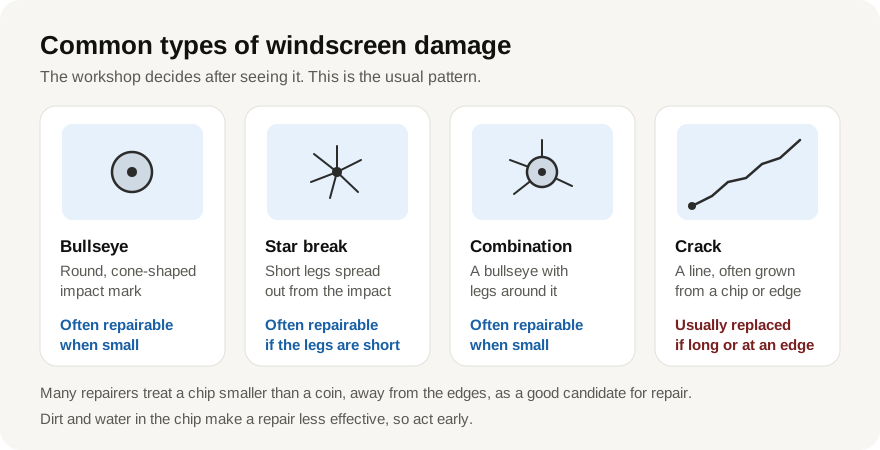
The workshop makes the final call after seeing the damage, but these are the things it looks at:
- Size. Small chips are the best candidates. Many repairers use roughly the size of a coin as a guide, but each sets its own limits.
- Type. Bullseyes and small star breaks usually repair well. A crack that has started to run is a different matter.
- Position. Damage close to the edge, in front of the driver, or near a camera is more likely to mean replacement. More on that below.
- Age and dirt. A fresh chip repairs better than one that has collected months of grime and rain.
- How many. Several chips close together can weaken the glass more than one.
Where the chip is matters
Two chips of the same size can get different answers depending on where they sit on the glass.
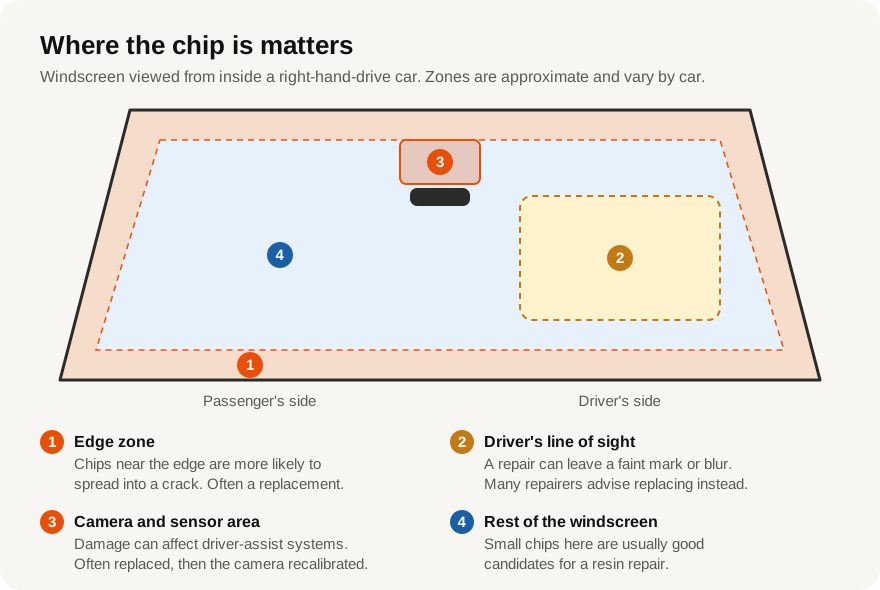
- Near the edge. The glass is under more stress around the frame, so chips there are more likely to turn into cracks.
- In front of the driver. Even a good repair can leave a slight distortion, and that is the last place you want one. Many repairers will recommend a new windscreen for damage in the driver's direct view.
- Near the camera. Many newer cars have a camera and sensors behind the rear-view mirror for lane keeping and automatic braking. Damage in front of them can affect how those systems see the road, so some carmakers advise replacing the glass rather than repairing it. Check your handbook.
Why chips spread, and what to do in the meantime
Singapore conditions are hard on a damaged windscreen. Glass that has sat in the midday sun gets very hot, and blasting cold aircon onto it puts the chip under stress. Heavy rain and car washes push water and dirt into it. Potholes, speed bumps and slammed doors all flex the glass a little more.
- Cover the chip with a small piece of clear tape to keep water and dirt out until it is repaired.
- Avoid pointing the aircon or demister straight at the windscreen on full blast, especially after parking in the sun.
- Skip the pressure washer and automatic car wash until it is fixed.
- Close doors gently and take speed bumps slowly.
- Book a repair soon. The longer you leave it, the more likely a repair turns into a replacement.
Take a clear photo of the chip with a coin beside it for scale, plus one showing where it sits on the windscreen. That lets a workshop say whether it looks repairable before you drive over.
When not to drive: if a crack runs across your line of sight and you cannot see clearly, if the windscreen has a hole or is sinking or moving in its frame, or if a side window has shattered and left loose glass in the cabin, do not drive until it has been made safe. Arrange for a workshop to come to you or for the car to be moved.
Side and rear windows are different
Windscreens are made from laminated glass: two layers of glass with a plastic layer between them. A stone chip usually stays in the outer layer, which is why it can be filled. Most side and rear windows are tempered glass, which is built to break into small, blunt pieces. It cannot be repaired, so a cracked or shattered side window is replaced.
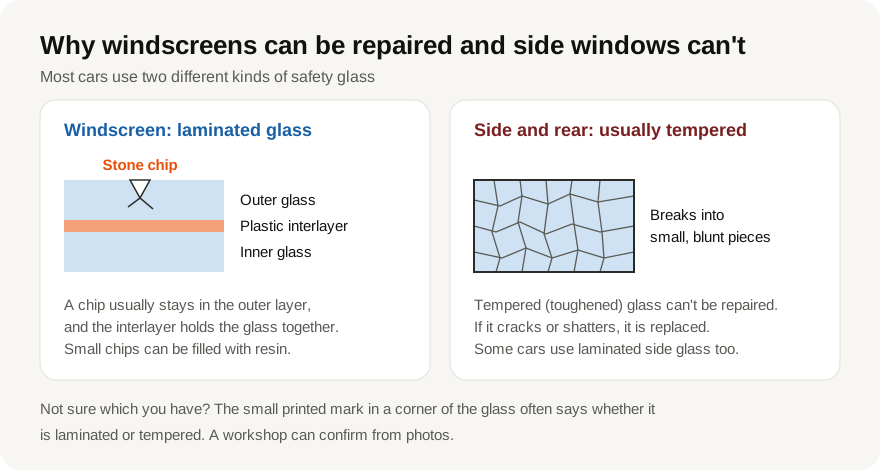
Some cars, often higher-end models, use laminated glass in the side windows too, for quietness and security. If you are not sure what your car has, a workshop can usually tell from photos of the mark in the corner of the glass.
If the windscreen is replaced
A replacement is more than swapping the glass. Before you book, find out what your car's windscreen carries, as it affects the glass and the work needed:
- Driver-assist camera. If the car has a camera on the windscreen, it usually needs recalibrating after a new windscreen is fitted so lane keeping and automatic braking work correctly. Ask whether the quote includes this.
- Rain and light sensors, heated glass, head-up display or acoustic glass. These need the right glass for your model. Ask whether the quote is for original or aftermarket glass, and whether it has the same features.
- ERP on-board unit. Windscreen work can mean temporarily removing parts of the OBU. LTA says only authorised persons can install the OBU, and having its parts repositioned at an unauthorised workshop can void the OBU warranty. Ask how the workshop handles this.
- Tint. Any film on the old windscreen goes with it. If you want film on the new glass, it still has to meet LTA's light limits; see our window tint rules guide.
- Curing time. The adhesive needs time to set before the car is safe to drive. Ask the workshop how long to wait.
Before you book
Glass quotes depend on the damage and on your exact car, so the more detail you give, the closer the quotes will be. Tell workshops:
- The make, model and year
- Photos of the damage with a coin for scale, and one showing where it is on the glass
- Whether it is a chip or a crack, and roughly when it happened
- Whether the car has a camera behind the mirror, rain sensors, heated glass or a head-up display
- Whether you plan to claim on your insurance
When the quotes come back, check whether they are for a repair or a replacement, original or aftermarket glass, whether camera recalibration is included, and what warranty comes with the work. On AXL you can describe the windscreen job once and vetted workshops quote, so you can compare repair and replacement options side by side.
Frequently asked questions
Can I keep driving with a chipped windscreen?
A small chip outside your line of sight usually does not stop you driving, but get it looked at soon, as heat, rain and bumps can make it spread. If a crack blocks your view or the glass is loose or holed, do not drive until it has been fixed.
Will a chipped windscreen affect my car's inspection?
LTA's periodic inspection includes the windscreen as part of checking the vehicle's body condition. LTA does not publish a chip size limit on its inspection page, so if your car is due for inspection, ask the inspection centre or your workshop whether the damage will be a problem.
Does car insurance cover windscreen damage?
Many policies include some windscreen cover, but the excess, the effect on your no-claim discount and whether you must use an approved workshop vary by insurer and policy. Check your policy before you book.
Describe the job once and Singapore workshops send you quotes to compare. Your details stay private until you choose.
Get free quotesRelated services
More guides
- Car aircon not cold? 8 common causes and what to do
- How to compare car workshop quotes (and what to ask before you say yes)
- Car servicing schedule in Singapore: minor vs major service
- Brake warning signs: what each symptom means
- Car battery warning signs: when to replace it
- When to replace your car tyres: tread, age and wear
- Check engine light on? What it means and what to do
- Car scratch or dent: what can be fixed, and how?
- CVT and automatic gearbox warning signs: when to worry
- Ceramic coating vs polish vs wax: what each one does
- Car window tint rules in Singapore: how dark can you go?