What kind of damage is it?
Wheel damage falls into two groups. Cosmetic damage spoils the look but does not affect strength. Structural damage changes the shape or strength of the wheel, and that is what decides whether a repair is safe.
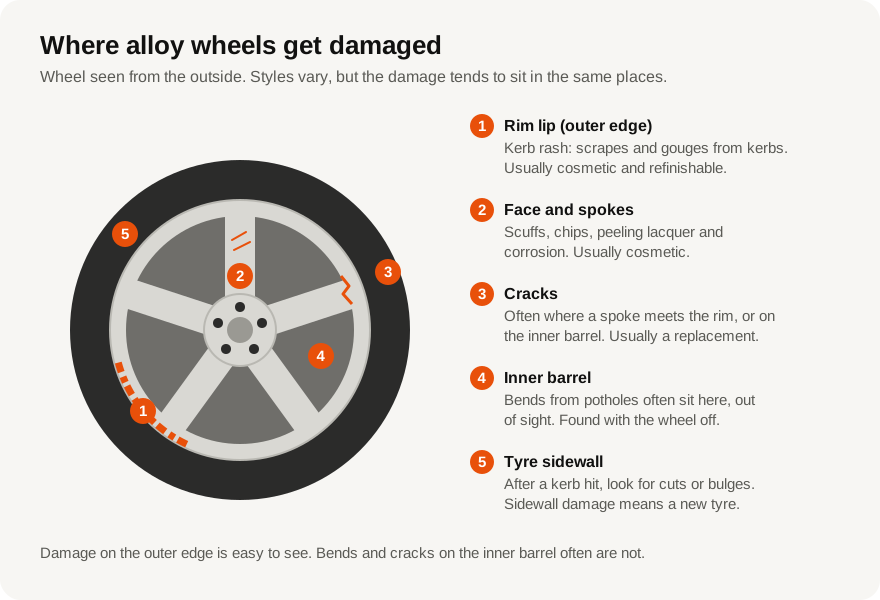
- Kerb rash: scrapes and gouges on the outer edge of the rim. The most common damage, and usually cosmetic unless a chunk of metal is missing.
- Scuffs, peeling lacquer and corrosion: the finish breaks down and white or grey spots appear under the lacquer. Cosmetic at first, but corrosion where the tyre seals against the rim can cause slow air leaks.
- Bends and buckles: usually from a pothole, a kerb taken at speed or a hard knock on a car park ramp. They often sit on the inner side of the wheel, where you cannot see them, and show up as vibration or a tyre that keeps losing air.
- Cracks: a split in the metal, often where a spoke meets the rim or on the inner barrel. Treat any crack as serious.
Larger wheels with low-profile tyres have less rubber cushioning the rim, so they are more likely to pick up both kerb rash and pothole bends.
Repair or replace: what usually decides it
- Usually repairable: kerb rash, scuffs, light gouges, peeling lacquer and surface corrosion. The damaged area is sanded, filled where needed and refinished, or the whole wheel is refurbished.
- Often repairable, after inspection: a light bend or buckle. Many workshops can straighten a wheel on a machine and check it runs true afterwards. Ask how they do it and whether they check the wheel for cracks once it is straight.
- Usually replaced: a crack, a bend that is severe or close to a spoke, a gouge that has taken a chunk out of the rim, or a wheel that has already been repaired in the same spot.
Some shops offer to weld cracked alloy wheels. A welded wheel may not be as strong as the original, and many wheel makers advise against repairing cracks in load-bearing areas. For a car you drive every day, a replacement wheel is the safer choice. If you replace one wheel, it should match the original size, offset and load rating your car specifies. Check your handbook or ask the workshop.
Ask the workshop to check the wheel with the tyre off or on a balancing machine before they quote for a cosmetic repair. Refinishing a wheel that turns out to be bent or cracked is money spent twice.
Your wheel's finish changes the repair
The same kerb rash can be a simple job or a specialist one depending on how the wheel is finished.
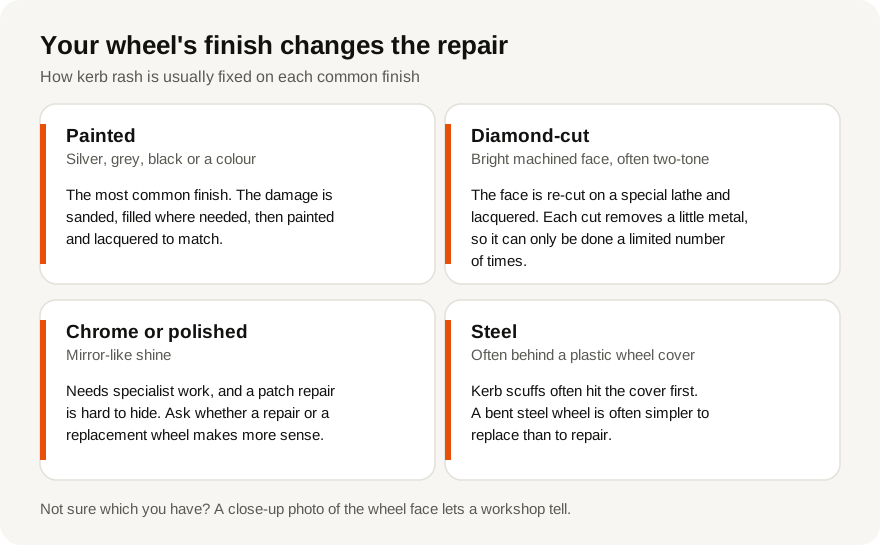
For painted wheels, ask whether the workshop will match the colour and repair just the damaged area or refinish the whole wheel face. A full refinish usually gives a more even look, especially on a wheel that has faded. In Singapore's heat and frequent rain, a chip that reaches bare metal is worth sealing soon, before corrosion creeps under the surrounding lacquer.
Most refurbishment means taking the tyre off. If your car has tyre pressure sensors inside the wheels, the workshop needs to take care with them and check the system works afterwards. The wheel should also be balanced again before it goes back on.
When not to drive on it
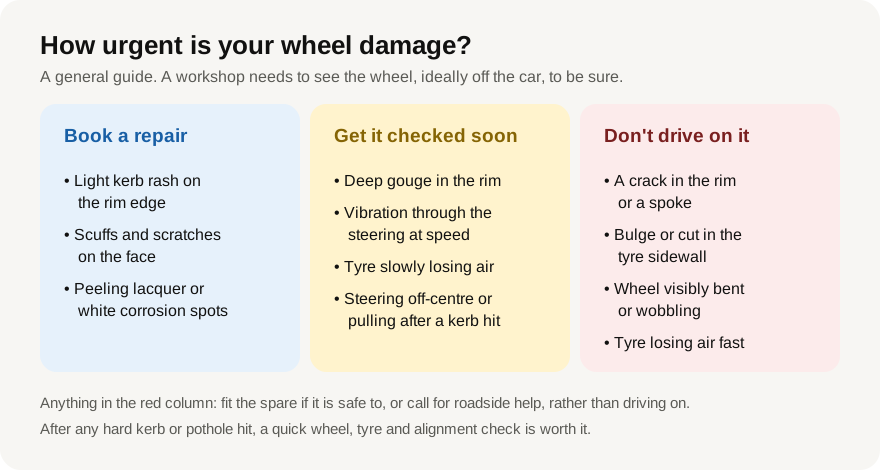
Do not drive on the wheel if you can see a crack in the rim or a spoke, if the tyre has a bulge or cut in the sidewall, if the wheel is visibly bent or wobbles as it turns, or if the tyre is losing air quickly. Stop somewhere safe, fit the spare if your car has one and it is safe to do so, or call your roadside assistance. A cracked or badly bent wheel can lose pressure suddenly, and a damaged sidewall can fail at speed.
A hard kerb strike can also knock the wheel alignment out or damage steering and suspension parts, even when the wheel itself looks fine. If the steering wheel sits off-centre, the car pulls to one side or there is a new knock or vibration, get it checked before your next long drive. Our tyre guide explains what uneven tyre wear after a knock can tell you.
Before you book
Wheel quotes depend on the damage, the finish and how many wheels need work, so good photos help workshops quote accurately. Send:
- A photo of the whole wheel, and close-ups of each damaged area with a coin for scale
- The wheel size, which is on the tyre sidewall (for example, R18 means an 18-inch wheel)
- The finish: painted, diamond-cut, chrome or steel, if you know
- Any vibration, pulling or air loss since the damage happened
- Whether you want the damaged area fixed, the whole wheel refinished or all four wheels done to match
When the quotes come back, check whether each one includes removing and refitting the tyre, balancing, and a check for bends or cracks. On AXL you can describe your wheel damage once and vetted workshops quote, so you can compare repair and replacement options side by side.
Frequently asked questions
Is kerb rash just cosmetic?
Usually, yes. Light scrapes on the outer edge of the rim do not affect strength and can be refinished. A deep gouge that has taken a chunk out of the rim, or any sign of a crack or bend, is different and should be checked before you keep driving on it.
Can a cracked alloy wheel be repaired?
Some shops offer to weld cracks, but a welded wheel may not be as strong as the original, and many wheel makers advise against repairing cracks in load-bearing areas. For a car you drive every day, replacing a cracked wheel is the safer choice.
Why does my tyre keep losing air when there is no puncture?
A common cause is the wheel rather than the tyre: corrosion where the tyre seals against the rim, a small bend from a pothole or kerb, or a crack on the inner barrel. A workshop can find it by checking the wheel with the tyre off.
Describe the job once and Singapore workshops send you quotes to compare. Your details stay private until you choose.
Get free quotesRelated services
More guides
- Car aircon not cold? 8 common causes and what to do
- How to compare car workshop quotes (and what to ask before you say yes)
- Car servicing schedule in Singapore: minor vs major service
- Brake warning signs: what each symptom means
- Car battery warning signs: when to replace it
- When to replace your car tyres: tread, age and wear
- Check engine light on? What it means and what to do
- Car scratch or dent: what can be fixed, and how?
- CVT and automatic gearbox warning signs: when to worry
- Ceramic coating vs polish vs wax: what each one does
- Car window tint rules in Singapore: how dark can you go?
- Windscreen chip: repair it or replace the glass?
- EV servicing in Singapore: what it involves and what is different