Why interiors wear faster in Singapore
A car parked in an open-air car park can get very hot inside, and the dashboard, steering wheel and seat tops take the most sun. Add year-round humidity and the materials age in a few familiar ways:
- Leather and vinyl dry out, fade and crack, starting with the driver's side bolster where you slide in and out.
- Soft-touch coatings on door handles, switches, consoles and dash trim can break down in heat and humidity and turn sticky, tacky or start to peel.
- Headliners are fabric glued to a foam layer on a roof board. Over time the foam crumbles and the fabric lets go, so the roof lining sags.
- Plastic trim gets brittle, and clips loosen with heat cycles, which is where many rattles start.
- Fabric seats and carpets hold moisture, so spills or a small water leak can lead to musty smells and mould.
A sunshade on the windscreen, parking in the shade or under cover, and wiping leather with a suitable cleaner and conditioner all slow this down. Window tint helps cut heat too. Avoid harsh all-purpose cleaners on soft-touch plastics, as they can make sticky coatings worse.
Repair or replace? Part by part
Whether a part can be repaired depends on the material and how far the damage goes. As a rough guide:
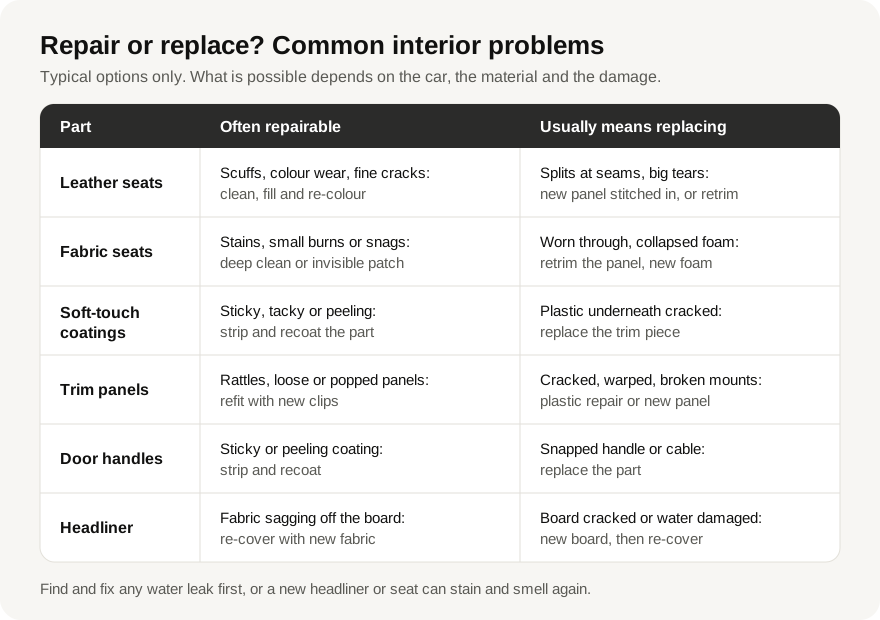
- Seats: small leather damage can often be repaired and re-coloured so it blends in. Larger splits usually mean replacing that panel of the cover, and a worn, flattened driver's seat may also need new foam. A good trimmer will try to match the original material and stitching, but an exact match is not always possible on older cars.
- Sticky or peeling soft-touch parts: the usual fix is to strip the old coating and refinish the part, or replace the trim piece. Ask workshops to quote both, as the cost of a new part varies a lot between models.
- Trim panels and rattles: often just broken or missing clips. Cracked panels can sometimes be plastic-welded from behind, otherwise a new or used panel is fitted.
- Headliners: spraying glue behind sagging fabric rarely lasts, because the foam backing has already crumbled. The lasting fix is to remove the board, clean it off and re-cover it in new fabric.
When interior problems become a safety issue
Most interior wear is cosmetic, but some problems need attention before you keep driving:
- A seat that will not lock in place, slides when you brake or has a broken backrest adjuster: do not drive the car until it is fixed.
- A seat belt that is frayed, cut or will not latch or retract properly: do not drive the car until it is fixed.
- A sagging headliner that hangs into your view of the rear window or mirrors: do not drive until it is pinned back or repaired.
- A door that will not open from the inside because of a broken handle or cable: get it fixed soon, as passengers need to be able to get out quickly.
- The airbag or SRS warning light is on: the airbags may not work in a crash. Get it checked as soon as possible, and straight away if it came on after interior work.
Airbags sit behind several parts of the interior, so some trim jobs are not simple cosmetic work. LTA says any change to airbag-equipped seats or steering wheels must be done in consultation with the car maker or its authorised agent, and that seats must be secured at the car's original anchorage points without blocking the driver's view.
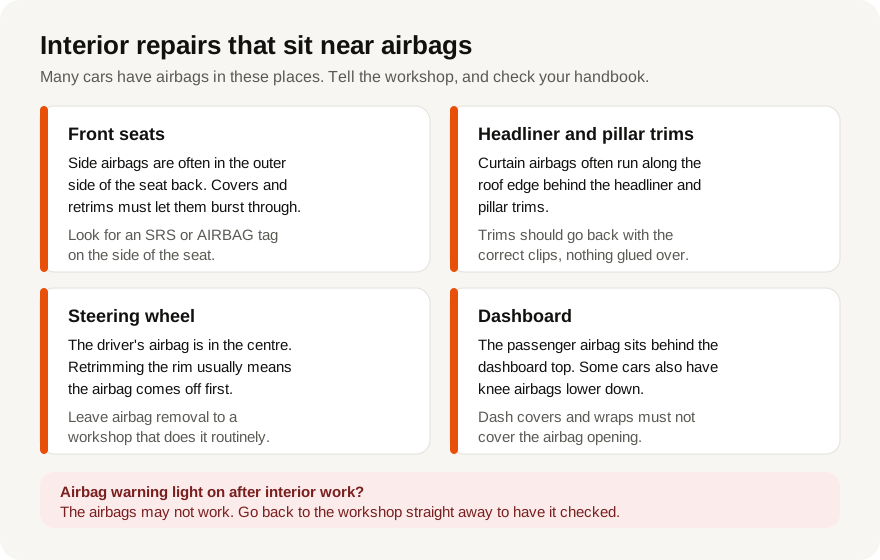
Slip-on seat covers sold online may not suit seats with side airbags. If your seats have an SRS or AIRBAG tag, only use covers made to work with seat airbags, and check with the car maker or a workshop first.
Before you book
Interior quotes depend on the material, whether parts are repaired or replaced, and how much trim has to come off to reach the problem. Photos help a lot.
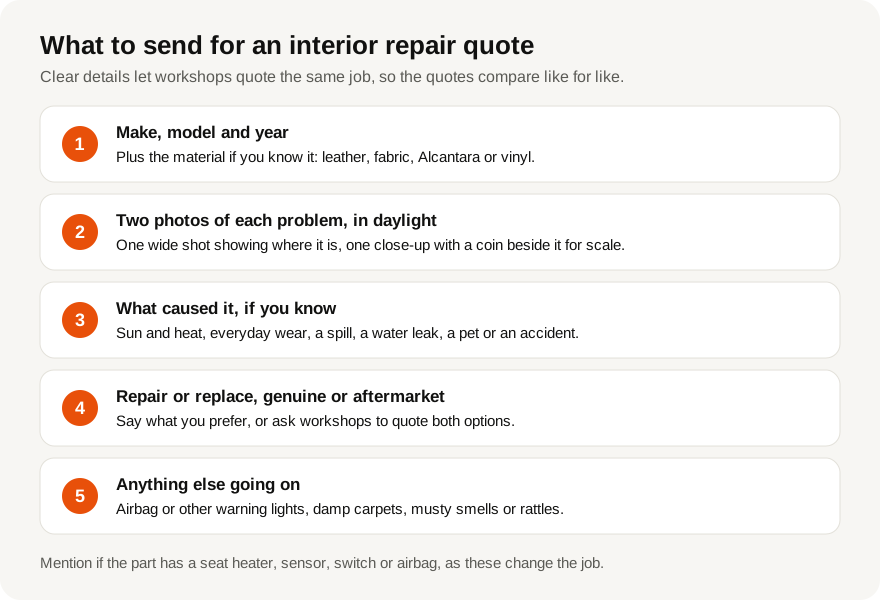
If there is any sign of water inside, such as a damp carpet, a stained headliner or a musty smell, ask for the leak to be found first. Blocked sunroof or door drains and tired seals are common culprits, and there is little point re-covering a headliner that will get wet again.
When quotes come back, check whether each one is a repair or a replacement, whether parts are genuine, aftermarket or used, how closely the colour and material will match, and what warranty comes with the work. On AXL you can describe the interior repair once and vetted workshops quote, so you can compare repair and replacement options side by side.
Frequently asked questions
Why are my car's door handles and buttons sticky?
Many cars use a soft-touch rubbery coating on handles, switches and trim, and it can break down with age, heat and humidity until it feels tacky or peels. A workshop can usually strip and refinish the part or replace it. Avoid strong solvents, which can damage the plastic underneath.
Can a sagging headliner be glued back up?
Glue alone rarely lasts, because the foam layer behind the fabric has usually crumbled. The lasting repair is to remove the headliner board, clean it and re-cover it with new fabric. If the headliner hangs into your view, pin it back or have it fixed before you drive.
Can torn leather seats be repaired instead of replaced?
Scuffs, colour wear and small cracks can often be filled and re-coloured. Bigger tears or splits along a seam usually mean replacing that panel of the cover. If the seat has a side airbag, make sure the trimmer knows, as the seam it bursts through must work properly.
Describe the job once and Singapore workshops send you quotes to compare. Your details stay private until you choose.
Get free quotesRelated services
More guides
- Car aircon not cold? 8 common causes and what to do
- How to compare car workshop quotes (and what to ask before you say yes)
- Car servicing schedule in Singapore: minor vs major service
- Brake warning signs: what each symptom means
- Car battery warning signs: when to replace it
- When to replace your car tyres: tread, age and wear
- Check engine light on? What it means and what to do
- Car scratch or dent: what can be fixed, and how?
- CVT and automatic gearbox warning signs: when to worry
- Ceramic coating vs polish vs wax: what each one does
- Car window tint rules in Singapore: how dark can you go?
- Windscreen chip: repair it or replace the glass?
- EV servicing in Singapore: what it involves and what is different
- Kerbed alloy wheel: repair it or replace it?
- Car wrap or PPF: what each one does and what to know first
- Car modification rules in Singapore: what needs LTA approval?